On this page
The EPA says homeowners can usually clean mold covering less than about 10 square feet, roughly a 3-by-3-foot patch, on hard surfaces. Larger areas, mold in walls or HVAC, sewage-related mold, and homes with vulnerable people call for professional remediation.
Five Questions Before You Start
Answer these honestly. If any answer points to "call a pro", do not start the job yourself.
| Question | DIY is reasonable if… | Call a pro if… |
|---|---|---|
| How big is it? | Under about 10 sq ft in one spot | 10 sq ft or more, or in several places |
| What is it growing on? | Concrete, tile, metal, sealed wood | Drywall, carpet, pad, insulation, ceiling tile |
| Where did the water come from? | A small, fixed leak or condensation | Floodwater, sewage, a floor drain or a long-running leak |
| Who lives in the house? | Healthy adults | Anyone with asthma, allergies, a weak immune system, a newborn or someone pregnant |
| Is the water stopped? | Yes, and the area reads dry | No, or you do not know where it is coming from |
DIY vs Professional: Side by Side
| DIY | Professional | |
|---|---|---|
| Best for | Under 10 sq ft on hard, nonporous surfaces | Larger areas, porous materials, hidden mold |
| Containment | None or basic plastic | Sealed containment with negative air pressure |
| Air filtration | None | HEPA air scrubbers |
| Removal of drywall/carpet | Risky without containment | Bagged inside containment |
| Moisture diagnosis | Guesswork | Meters, thermal imaging, source tracing |
| Documentation | None | Photos, scope, optional clearance testing |
| Cost | $50 – $150 in gear and supplies | $500 – $7,000+ depending on scope |
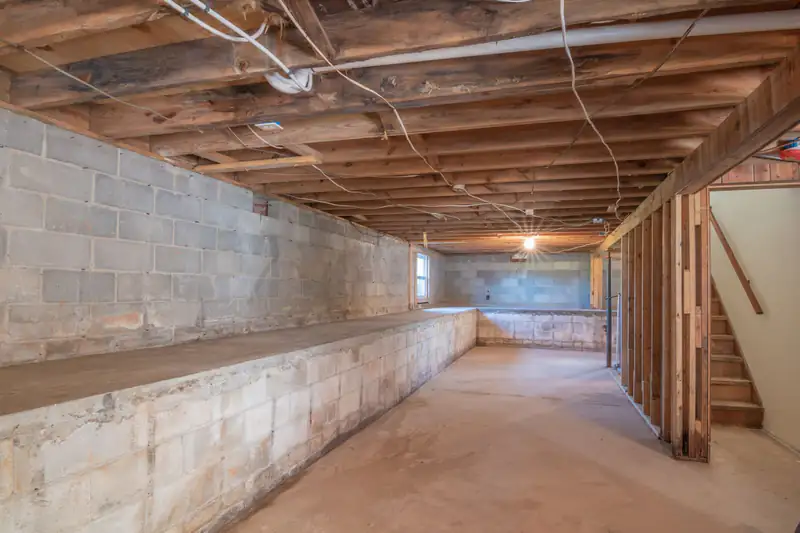
What You Can and Cannot DIY in a Basement
Usually fine to DIY
Spots on bare concrete walls or the slab, a few square feet on painted block, shelving and plastic bins, metal ducts on the outside, and light surface spots on a stud you can see all of.
Leave to a pro
Mold on or behind drywall, carpet and pad, insulation, ceiling tiles, anything soaked by a floor drain or storm water, and growth that keeps coming back in the same spot.
Basement carpet is the one people most often try to save. Once pad has grown mold, it comes out; see moldy carpet and pad removal for what can be kept.
Gear and Supplies You Need
| Item | Typical cost | Why |
|---|---|---|
| N95 respirator (P100 is better) | $10 – $40 | Paper dust masks do not stop spores |
| Goggles without vent holes | $10 – $20 | Keeps spores and cleaner out of your eyes |
| Long gloves (nitrile or rubber) | $5 – $15 | Protects skin from mold and cleaner |
| Detergent, scrub brushes, disposable rags | $10 – $25 | The EPA cleaning method is detergent and water |
| Heavy plastic bags and tape | $10 – $20 | Bag waste before it leaves the room |
| Hygrometer or moisture meter | $15 – $40 | Confirms the area is actually dry |
Safe DIY Cleanup (Small Hard-Surface Patches)
- Fix the water source firstOtherwise the mold returns.
- Shut down the airTurn off the furnace or AC and cover nearby supply and return vents with plastic so spores do not travel upstairs.
- Protect yourselfN95 respirator or better, gloves and goggles without vent holes, as the EPA recommends.
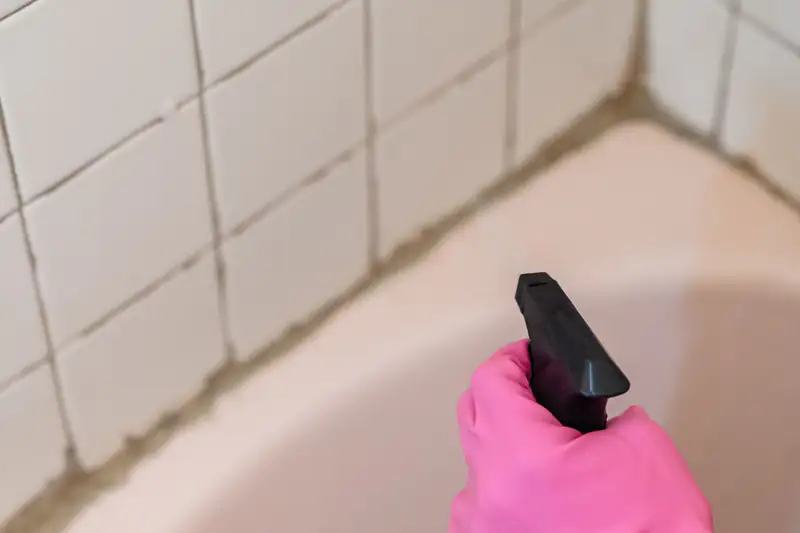
- Mist, then scrubLightly dampen the area so dust does not fly, then scrub with detergent and water.
- Bag wastePut rags and debris in plastic bags and seal them before carrying them out.
- Dry the areaUse a dehumidifier and fans, but do not blow air across mold before it is cleaned.
- Watch itCheck the spot again in two to four weeks. If it comes back, the moisture is still there.
Before you start, read about the health risks of black mold, especially if anyone in the house has asthma.
What Not to Do
- Do not mix bleach with ammonia or other cleaners; it creates toxic gas.
- Do not rely on bleach. The EPA does not recommend biocides as a routine practice, bleach does not reach growth inside porous materials, and dead mold can still cause allergic reactions.
- Do not paint over mold; the EPA says the paint is likely to peel.
- Do not sand or dry-brush mold without containment and a HEPA vacuum.
- Do not run an ozone generator in an occupied home; ozone irritates lungs and does not remove mold.
- Do not use a regular shop vacuum on mold; without a HEPA filter it blows spores back into the room.
If the patch is bigger than about 10 square feet, compare professional basement mold removal prices before buying gear.
Stop and Call a Pro Mid-Project If…
- The stain keeps going under the baseboard or behind the drywall.
- You find wet or moldy insulation or the back of the drywall is dark.
- The smell gets stronger instead of weaker after cleaning.
- Anyone starts coughing, wheezing or getting headaches during the work.
- The area will not dry, or the mold is back within days.
What a Professional Job Does Differently
The difference is not a stronger spray. It is control. A professional crew seals the work area, keeps it under negative air pressure with a HEPA air scrubber so dust flows out through the filter instead of into the house, removes porous materials in bags inside that containment, HEPA-vacuums and damp-wipes everything that stays, and dries the framing before anyone rebuilds.
When to Call a Professional
- The moldy area is larger than about 10 square feet.
- You see mold on drywall, carpet, insulation or wood framing.
- There was sewage or floodwater.
- Mold is in ducts or the HVAC system.
- Anyone in the home has asthma, allergies or a weakened immune system.
- You need documentation for a sale, a landlord or insurance.
- The mold came back after you cleaned it.
Professional remediation follows the process on our professional mold remediation process page. To get help, hire a basement mold removal crew in Eagle Mountain.
Frequently Asked Questions
Can I remove mold myself?
For hard-surface patches under about 10 square feet with the water source fixed, the EPA says usually yes, using detergent, water and protective gear.
How much does DIY mold removal cost?
About $50 to $150 for a respirator, goggles, gloves, detergent, bags and a moisture meter. That compares with a $500 to $1,500 minimum for a small professional job.
Is bleach good for killing mold?
Not as a routine method. Bleach does not reach growth inside porous materials, and the EPA does not recommend biocides routinely. Removal and drying work better.
Can I clean moldy drywall instead of replacing it?
Only a light surface spot on painted drywall that never got soaked. If the paper face or the back of the board has growth, it should be cut out inside containment.
Why does mold come back after I clean it?
Because the moisture is still there, or the growth was inside a porous material you could only wipe.