On this page
The most reliable sign of basement mold is a musty, earthy smell that does not go away. Other signs: peeling paint or stains low on walls, swollen baseboards, damp carpet edges, white or dark fuzzy spots, condensation, and allergy symptoms that are worse downstairs.
The 9 Most Common Signs
- Musty smellCaused by gases that growing mold releases (MVOCs). Strongest near the source, often one wall or corner.
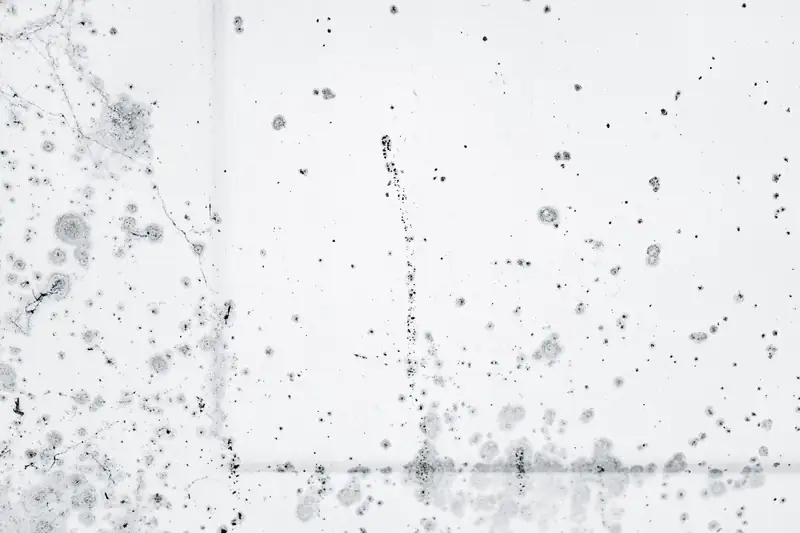
- Visible spotsBlack, green, white, gray or even orange patches on walls, ceilings, joists, stored items or around the furnace.
- Peeling, bubbling or stained paintEspecially along the bottom 1 to 2 feet of walls.
- Swollen or stained baseboardsWood trim absorbs water from wet drywall and slab.
- Damp or discolored carpet edgesCarpet pad holds water against the slab.
- EfflorescenceWhite, powdery salt deposits on concrete mean water is moving through it.
- CondensationSweating windows, pipes and ducts mean high humidity.
- Warped flooringLaminate or wood that cups or lifts.
- Allergy symptoms downstairsSneezing, congestion or itchy eyes that ease when you leave the basement.
A musty smell without visible growth is the most common sign, and mold odor removal always starts with finding the source.
What Basement Mold Looks Like
Mold is not always black, and not every stain is mold. This table covers what you are most likely to find in a Utah basement.
| What you see | Probably | How to tell |
|---|---|---|
| Black or dark green spots on drywall | Mold | Smears when wiped; often on the back of the board too |
| White fuzzy growth on joists or boxes | Mold | Soft and raised; grows on wood, paper and fabric |
| White crusty powder on concrete | Efflorescence (mineral salts) | Crumbles to powder and dissolves in water; never on wood |
| Gray or white powdery film in a damp room | Mildew (surface mold) | Flat and powdery; wipes off a hard surface |
| Yellow or brown rings on ceiling or walls | Water stain | Dry and flat; still means a leak worth finding |
| Dark stain at the bottom of a wall | Mold or water staining | Press it: soft drywall means it has been wet a long time |
Where to Look in an Eagle Mountain Basement
- Walls next to window wells, especially after spring snowmelt.
- Around the water heater, water softener and laundry hookups.
- Under the stairs and in storage rooms with cardboard boxes.
- Behind furniture pushed against exterior walls.
- Around the sump pit and floor drains.
- Near the furnace and visible ducts.
Rim joists are easy to miss; see rim joist insulation mold for what to look for behind the batts.
Signs by Season
| Season | What to watch for | Usual cause |
|---|---|---|
| Spring (March–May) | Wet carpet or drywall below basement windows | Snowmelt filling window wells |
| Summer | Damp lower walls on the yard side; musty smell in storage rooms | Sprinklers soaking the foundation; summer cloudbursts |
| Fall | Smell returns when the house is closed up | Moisture left from summer leaks |
| Winter | Frost or water on rim joists; sweating windows | Warm indoor air hitting cold framing |
A 15-Minute Basement Mold Check
You do not need special gear for a first look. Do this in the morning, after the basement has been closed up overnight.
- Smell testWalk in and note where the smell is strongest. Follow it.
- Check humidityA $15 hygrometer should read under 50%. Above 60% for days is a warning sign.
- Look lowScan the bottom 2 feet of every exterior wall, baseboards and the backs of furniture.
- Press on drywallSoft or crumbly drywall at floor level means water damage.
- Lift a carpet cornerCheck the pad and tack strip near any suspect wall, the water heater and the laundry.
- Check stored itemsLook at cardboard boxes, the undersides of shelves and anything sitting on the slab.
- Look upCheck rim joists and the subfloor above, especially near window wells and plumbing.
- Check the mechanicalsLook around the water heater base, the furnace and the sump pit.
Can Basement Mold Affect Upstairs?
Yes. Warm air rises through a house (the stack effect), so basement air, spores and odors are pulled upstairs through stairwells, plumbing chases and especially return ducts. If the smell is strongest when the furnace or AC kicks on, the system may be part of the problem; see our notes on mold in the furnace and return ducts.
Signs That Mean Call Today
Get help the same day if water is still coming in, materials have been wet for more than 48 hours, sewage or floor-drain water was involved, the smell is spreading upstairs, or someone in the house has asthma, a weakened immune system or a new infant.
How to Check for Hidden Mold
Use your nose
Walk the basement after it has been closed up overnight; the smell is strongest then.
Check humidity
A $15 hygrometer tells you if humidity is above the EPA's 30–50% range.
Press on drywall
Soft or crumbly drywall at floor level means water damage.
Lift a carpet corner
Look at the pad and tack strip near a suspect wall.
Do not tear open walls yourself to look. Opening a moldy wall without containment spreads spores through the house.
Found one or more signs? A professional mold inspection confirms it without guesswork, and our basement mold removal when you spot the signs handles the rest. Not sure? Call a pro when you do not know; the visual inspection is free.
Frequently Asked Questions
How do I know if my basement has mold?
A lasting musty smell is the best clue. Look for stains, peeling paint, swollen baseboards and damp carpet edges, and check humidity.
Is it mold or efflorescence?
Efflorescence is a white, crusty mineral powder on concrete that dissolves in water. Mold is fuzzy or slimy, smears when wiped and grows on wood, paper and drywall.
Is white mold in a basement dangerous?
White mold is treated the same as any other color. It can trigger allergies and should be removed and the moisture fixed.
Does a musty basement always mean mold?
Not always. Damp concrete, wet cardboard or a dirty AC coil can smell musty, but a smell that lasts usually means mold is growing somewhere.
Can mold in the basement affect upstairs?
Yes. Air rises through the house (the stack effect), carrying spores and odors upstairs, especially through return ducts.
Do most basements have mold?
All basements have some mold spores, like everywhere else. Active growth happens only where there is moisture.