On this page
Bleach kills surface mold on hard, non-porous surfaces like tile, glass and sealed counters. It does not reach growth inside porous materials like drywall, wood and carpet, and dead mold can still cause allergic reactions. The EPA does not recommend biocides as a routine cleanup step; detergent and water, followed by complete drying, work for most hard surfaces, and moldy porous materials are removed.
What the EPA and CDC Say
- The EPA recommends scrubbing mold off hard surfaces with detergent and water and drying completely.
- The EPA does not recommend using biocides like bleach as a routine practice; the goal is removal, not killing.
- The CDC says if you use bleach, use no more than 1 cup of household bleach per gallon of water, and never mix it with ammonia or other cleaners.
- Absorbent materials like drywall, ceiling tiles and carpet that grow mold may need to be thrown away.
Surface by Surface
| Surface | Bleach? | What works better |
|---|---|---|
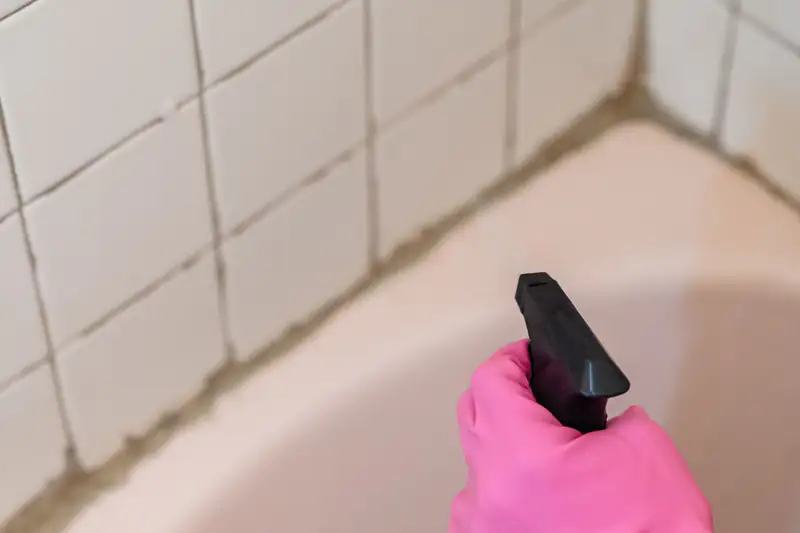
| Tile, glass, porcelain | Works on the surface | Detergent and water is usually enough; dry fully |
| Grout and caulk | Lightens stains | Scrub grout; replace caulk with mold growing behind it |
| Bare concrete | Limited | Scrub with detergent; fix the moisture; efflorescence is not mold |
| Painted drywall, light surface spots | Bleaches, does not penetrate | Damp-wipe with detergent; watch for return |
| Drywall with growth in the paper | No | Cut out and replace inside containment |
| Wood framing | No | HEPA vacuum, scrub or sand, dry below about 15% moisture |
| Carpet and pad | No | Usually removed |
What About Vinegar, Peroxide and Mold Sprays?
White vinegar, hydrogen peroxide, borax solutions and store-bought mold removers can all help on small hard-surface spots, and some are gentler than bleach. None of them fixes mold inside porous materials, and none of them fixes the moisture. Use whichever you like on a small tile or concrete spot, then dry it and keep it dry.
Never mix bleach with ammonia, vinegar or other cleaners. The fumes are toxic. Ventilate, wear gloves and eye protection, and keep kids and pets away.
Cleaning a Small Tile or Concrete Spot, Step by Step
- Fix the moisture firstA leaking caulk line, a fan that does not vent, or a damp wall.
- Gear up and ventilateN95, gloves and goggles; open a window or run the exhaust fan.
- Scrub with detergent and waterA stiff brush on tile and concrete; a toothbrush for grout lines.
- Optional: a disinfectantIf you choose bleach on a hard surface, follow the CDC limit of 1 cup per gallon, and never mix it with anything else.
- Rinse and dry completelyWipe dry and run a fan; moisture left behind is what lets it return.
- Replace failed caulkMold behind caulk will not scrub out; cut it out and recaulk once the area is dry.
Concrete, Efflorescence and Basement Walls
Bleach is often used on basement concrete for white or dark marks that are not mold at all. White, crusty, powdery deposits are usually efflorescence, salts left behind as water moves through the concrete. Bleach does nothing for them and the real message is that water is coming through the wall. Dark spots on bare concrete are usually mold growing on dust and residue, which detergent and drying handle.
Why Spraying Is Not Remediation
Professional mold remediation is about controlled removal, not chemicals. Containment and negative air keep spores from spreading, porous materials with growth come out, and everything that stays is HEPA-vacuumed and wiped. That is why our approach is containment and removal instead of spraying, and why moldy drywall gets cut out rather than painted over.
When You Can Handle It Yourself
Small patches, under about 10 square feet on hard surfaces, with the water source fixed, are usually a DIY job. Follow the safe DIY cleanup steps and wear an N95, gloves and goggles.
Mold back after you bleached it? That usually means hidden growth; book a free look at recurring basement mold.
Frequently Asked Questions
Does bleach kill mold on drywall?
Not reliably. Bleach whitens the surface but does not reach growth in the paper and gypsum. Drywall with mold growth is usually cut out and replaced.
What kills mold better than bleach?
For hard surfaces, detergent and water with complete drying works for most spots. For porous materials, removal is what works.
Is vinegar or bleach better for mold?
Both can help on small hard-surface spots. Neither fixes mold inside porous materials or the moisture that caused it. Never mix them.
What ratio of bleach to water for mold?
The CDC says no more than 1 cup of household bleach per gallon of water, and never mixed with ammonia or other cleaners.
Why does mold come back after bleaching?
Because the moisture is still there or the growth is inside a porous material bleach cannot reach. Fix the water and remove growth from porous materials.