On this page
Mold can start growing on wet materials within 24 to 48 hours. Visible growth and musty smells are common within 3 to 12 days, and growth spreads inside walls and under flooring over the following weeks if materials stay wet.
Check Your Mold Clock
Enter when the water first got in. The clock starts when materials got wet, not when you noticed the stain.
The clock starts when materials first got wet, not when you noticed.
The Mold Growth Timeline
| Time | What happens | What to do |
|---|---|---|
| 0–24 hours | Water soaks into drywall, carpet pad and wood | Stop the source, extract water, start drying |
| 24–48 hours | Mold spores on wet surfaces begin to germinate | Professional drying; remove saturated pad |
| 3–12 days | Visible growth on drywall backs and pad; musty odor | Inspection; remove moldy materials |
| 1–3 weeks | Growth spreads in walls and under floors; wood darkens | Full remediation inside containment |
| 1+ month | Structural wood can start to decay; strong odor | Remediation plus structural repair |
Water from a floor drain or sewer line needs professional water damage restoration, not just fans.
What Speeds It Up or Slows It Down
| Factor | Faster growth | Slower growth |
|---|---|---|
| Temperature | 60–86°F, which is most basements year-round | Cold, unheated spaces in winter |
| Material | Paper-faced drywall, carpet pad, cardboard, wood | Concrete, metal, tile, plastic |
| Water type | Dirty water with nutrients (floor drains, storm runoff) | Clean supply-line water caught quickly |
| Airflow | Behind drywall, under carpet, inside cabinets | Open surfaces with air movement |
| Humidity | Basement air above 60% | Dehumidified air under 50% |
Water Categories: Why the Source Matters
Restoration crews sort water into three categories under the IICRC S500 standard, and the category changes what can be saved.
Category 1: clean
A burst supply line or water heater. If it is caught fast, carpet and some drywall can often be dried in place.
Category 2: gray
Washing machine or dishwasher overflow. Pad is removed; more materials are cleaned or discarded.
Category 3: black
Sewage, floor-drain backups and outside floodwater. Porous materials it touched are removed, and the area is cleaned as a contaminated space.
Clean water turns dirty
Clean water that sits for a few days picks up contamination, and it is treated as a higher category.
Which Materials Mold First
Fastest
Carpet pad, paper-faced drywall, cardboard, ceiling tiles, fabric.
Medium
Wood framing, plywood, OSB, wood furniture.
Slowest
Concrete, metal, tile, plastic. Mold grows only on dust or residue.
Hidden risk
The back of drywall and the underside of flooring, where there is no airflow.
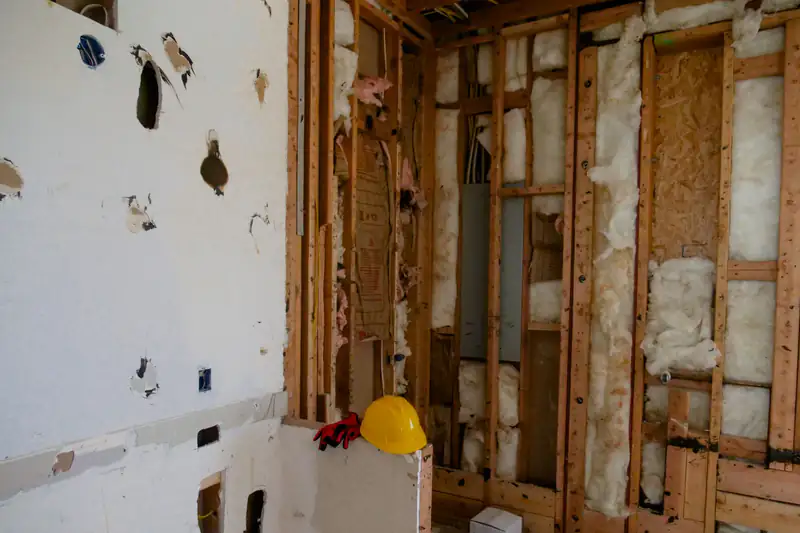
Soaked batts rarely dry in place; see wet insulation removal.
What Can Be Saved After a Leak
| Material | Usually | Notes |
|---|---|---|
| Carpet | Sometimes saved | Only clean water, dried within 24–48 hours |
| Carpet pad | Removed | Holds water against the slab |
| Drywall | Saved if it dries fast | Cut out if it stayed wet, swelled or was touched by dirty water |
| Fiberglass insulation | Removed | Holds water and dirt; cheap to replace |
| Wood framing | Dried and kept | Cleaned or sanded if stained |
| Cardboard boxes and paper | Removed | Contents may be saved if dry |
| Upholstered furniture | Depends | Discard if soaked by dirty water |
What to Do in the First 48 Hours
- Stop the waterShut off the supply or address the outside source.
- Stay safeTurn off power to wet areas.
- Document itPhotos and video of the water, the source and the date, before anything is moved.
- Remove waterWet vac small spills; call for extraction for anything larger.
- Pull wet carpet padIt rarely dries in place.
- Dry aggressivelyDehumidifiers and air movers, with humidity monitored.
- Check inside wallsIf water reached drywall, moisture readings tell you whether the inside is wet.
Eagle Mountain note: Dry Utah air helps materials dry, but it does not dry the inside of a wall cavity or the slab under carpet. Those still need equipment.
How to Tell It Is Really Dry
Dry to the touch is not dry. Restoration crews compare moisture readings in the wet area with readings from the same material in a part of the house that never got wet. The job is done when they match. If the drywall reads wet a foot above where the water reached, it has wicked water up inside the wall, and that section needs attention.
Not sure if the inside of the wall is wet? Book a moisture and mold check after the leak; the readings take minutes and tell you what has to come out.
Flood happening now? See our flooded basement cleanup service. Already smelling mold? Get fast basement mold removal after a leak.
Frequently Asked Questions
How long does it take for mold to grow after water damage?
Mold can begin growing within 24 to 48 hours on wet materials. Visible growth usually appears within 3 to 12 days.
Will mold grow if water dries within 24 hours?
Prompt drying within 24–48 hours is the best way to prevent mold, according to the EPA. Hidden moisture inside walls can still cause growth, so check readings.
Does water damage always mean mold?
No. If materials are dried quickly and completely, mold usually does not develop.
Can wet carpet be saved?
Sometimes, if the water was clean and the carpet is dried within 24 to 48 hours. The pad underneath is almost always replaced.
Should I test for mold after water damage?
If materials stayed wet more than 48 hours or you notice a musty smell, an inspection with moisture readings is worth it before rebuilding.