On this page
Storm water usually reaches Eagle Mountain basements through window wells, low doors and thresholds, floor drains that back up, and grading that sends runoff toward the house. The best fixes before next season: window well covers and working drains, grading and downspouts, a backwater valve if your floor drain has backed up, and a sump with a battery backup if you have one.
What Happened in 2026
FOX 13 reported that Utah set records in 2026 for severe thunderstorm and flash flood warnings, and KUER called this year's flood and thunderstorm season especially busy. Tropical moisture from Hurricane Polo and an El Niño pattern kept storms coming into late September. Some of the jump reflects better radar and warning practices, but for homeowners the lesson is the same: plan for short, heavy storms, not just spring snowmelt.
Eagle Mountain has seen what these storms do. In August 2024, back-to-back storms backed up storm drains and pushed water into basements in The Ranches and on the north and west benches; see our Ranches storm-drain flooding notes.
How Storm Water Gets In
| Entry point | What happens | Fix |
|---|---|---|
| Window wells | Fill faster than the drain can empty; water pushes past the window | Covers, clean gravel, a working drain |
| Basement doors and walkouts | Water sheets down a slope or patio to a low threshold | Regrade, trench drain, better sweep and threshold |
| Floor drains | Storm drains or the sewer back up into the lowest drain | Backwater valve installed by a plumber |
| Foundation walls | Saturated soil pushes water through cracks | Grading, downspouts, crack injection |
| Sump systems | Pump fails or power goes out mid-storm | Battery backup and high-water alarm |
Before Next Summer: The Short List
- Covers on every window wellClear, egress-rated, so someone can still get out in an emergency.
- Test the window well drainsPour a bucket in each one; it should drain in minutes.
- Fix grading and downspoutsSoil should fall at least 6 inches in the first 10 feet; downspouts should discharge several feet out.
- Consider a backwater valveIf a floor drain has ever backed up, ask a plumber about one.
- Back up the sumpBattery backup and an alarm if your basement depends on a pump.
- Get sandbags earlyEagle Mountain's stormwater department supplies them; pick some up before July.
Window wells, grading and drains are covered in more detail in our storm-ready basement waterproofing guide.
Choosing Window Well Covers
- Egress-rated so someone can push it open from inside in an emergency.
- Clear polycarbonate so the basement still gets light.
- Sized to the well, with no gaps at the edges where water can pour in.
- Sloped or domed so water and snow run off instead of pooling.
- Strong enough for snow load if it sits where snow piles up.
Where Sandbags Actually Help
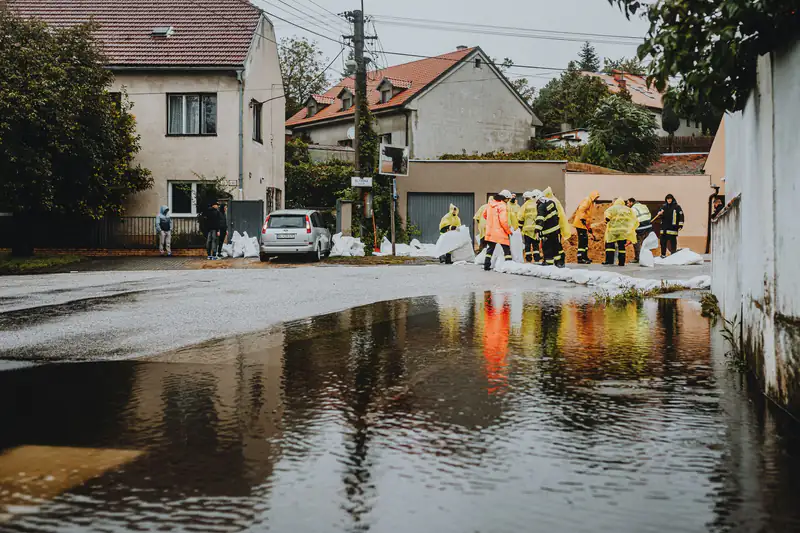
Sandbags are for redirecting shallow water, not sealing a basement. Use them to steer runoff away from a walkout door, the top of a window well or a low spot where water heads toward the house. Lay them like bricks, staggered, with plastic sheeting underneath on the water side. They will not stop water coming up through a floor drain; that is what a backwater valve is for.
Storm Water and Insurance
This is where storm damage surprises people. Surface water that flows in from outside, through a window well or under a door, is usually treated as flooding, which standard homeowners policies exclude. Water that backs up through a floor drain may be covered only with a water-backup endorsement. A separate flood policy covers outside water, and federal flood policies usually take 30 days to start, so buy before storm season, not during it.
If Water Gets In During a Storm
- Stay safeAvoid water near outlets; shut off power to the area from a dry spot.
- DocumentPhotos of the entry point, water level and damage.
- Treat it as dirty waterStorm runoff and drain backups carry soil and contamination; porous items it touched usually go.
- Start drying within a dayExtraction, pad removal and dehumidifiers before mold has a chance.
If water came in, our storm flood extraction and drying crew can start the same day, and we handle storm-related basement mold removal in Eagle Mountain if growth has started.
Frequently Asked Questions
Was 2026 a record storm year in Utah?
FOX 13 reported record numbers of severe thunderstorm and flash flood warnings in Utah in 2026, and KUER described the flood and thunderstorm season as especially busy.
How do I protect my basement from flash flooding?
Cover and maintain window wells, fix grading and downspouts, install a backwater valve if drains have backed up, back up your sump pump and keep sandbags on hand.
Does homeowners insurance cover storm flooding in a basement?
Usually not when surface water flows in from outside. Drain backups may be covered with a water-backup endorsement; outside flooding needs a flood policy.
Where can I get sandbags in Eagle Mountain?
Eagle Mountain City's stormwater department supplies sandbags and holds sandbag events; check with the city before storm season.
Do window well covers stop basement flooding?
They keep rain and snow out of the well and reduce flooding a lot, but the well drain still has to work for heavy storms. Use covers and a working drain together.