On this page
Before the first hard freeze: disconnect garden hoses, shut off and drain outdoor faucets, blow out sprinkler lines, insulate pipes along rim joists and exterior walls, clear window wells and add covers, and know where your main water shut-off is. In very cold snaps, keep the heat at 55°F or higher and let a faucet on an outside wall drip.
The Fall Checklist
| Task | Why it matters |
|---|---|
| Disconnect and drain garden hoses | A hose left on a frost-free bib traps water that freezes and splits the pipe inside the wall |
| Shut off and drain outdoor faucets | Older bibs without frost-free valves freeze right at the wall |
| Blow out sprinkler lines | Standard practice in Utah; frozen lines crack and leak next spring, often near the foundation |
| Insulate pipes at rim joists and exterior walls | The coldest spots in a basement are where the floor framing meets the foundation |
| Seal gaps around pipes through exterior walls | Cold air drafts freeze pipes even in a heated basement |
| Clear window wells and add covers | Snow in a well becomes snowmelt against the window in spring |
| Check the sump discharge line | A frozen outlet leaves the pump nowhere to send water |
| Find and test the main shut-off | Seconds count when a pipe bursts |
Hose Bibs: The Leak You Do Not See
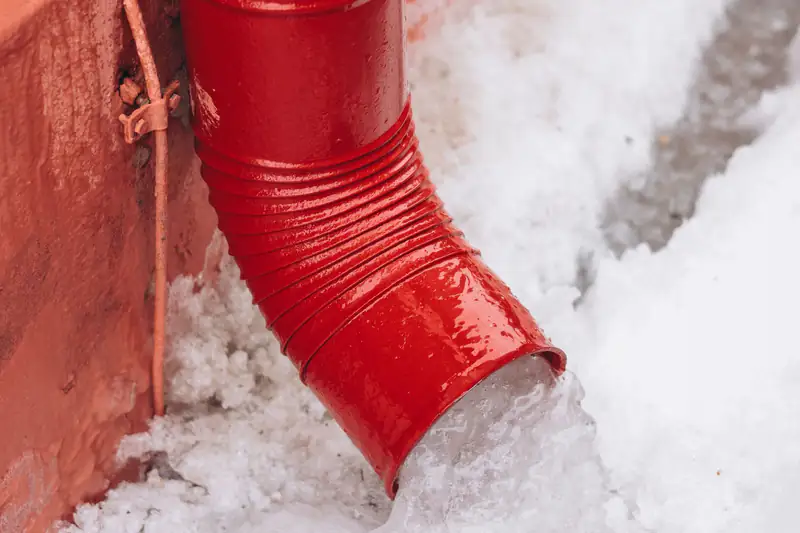
Frost-free hose bibs have the actual valve inside the house, so the outside part can drain. Leave a hose attached and water stays trapped in the pipe. When it freezes, the pipe splits inside the basement wall, and you will not know until you turn on the hose in April and water runs into the basement instead of the yard.
Rim Joists and Cold Corners
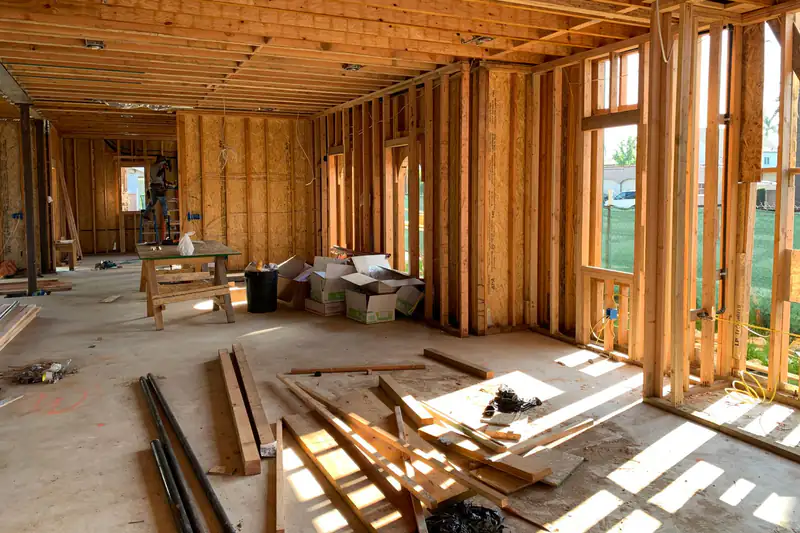
The rim joist sits on top of the foundation where the floor framing meets the outside wall. It is the coldest wood in the house in winter, and supply lines often run right along it. Two things go wrong there: pipes freeze, and warm, moist indoor air condenses on the cold wood behind fiberglass batts.
- Wrap pipes along the rim joist with foam pipe insulation.
- Seal and insulate the rim joist with rigid foam or spray foam, not loose batts.
- Keep the furnace humidifier modest on very cold nights.
- Look for frost or water drops on the rim joist on the coldest mornings.
Damp batts at the rim joist often hide growth; see winter condensation control for basements for the fix.
Leaving for the Holidays?
- Keep the thermostat at 55°F or higher; do not turn the heat off.
- Shut off the main water valve if the house will be empty for more than a few days, and leave the water heater on vacation mode.
- Ask a neighbor to check the house after any hard freeze.
- Put a leak sensor or smart shut-off near the water heater and under sinks.
- Make sure the sump pump has power and its discharge line is clear.
Evaporative Coolers and Outdoor Lines
Older Utah homes sometimes still use evaporative (swamp) coolers. Their water supply line usually runs through the attic or an exterior wall and needs to be shut off and drained in fall. The same goes for any line to an outdoor kitchen, hot tub or detached shop. If it holds water and sits in the cold, drain it before the first hard freeze.
During a Cold Snap
- Keep the heat onAt least 55°F, even if you are away. Many policies expect heat to be maintained.
- Open cabinet doorsOn sinks along exterior walls, so warm air reaches the pipes.
- Let a faucet dripA slow drip on the coldest nights keeps water moving in vulnerable lines.
- Do not use open flamesThaw a frozen pipe with a hair dryer or warm towels, never a torch.
If a Pipe Bursts
- Shut off the mainClose the main water valve immediately.
- Cut power to wet areasFrom a dry location only.
- DocumentPhotos and video before cleanup, for insurance.
- Start drying the same dayPull wet pad, open baseboards and get a dehumidifier running.
A burst pipe is usually a sudden, covered loss; our Utah mold and water insurance guide covers what to document. If several rooms got wet, call for burst-pipe water extraction.
Winter leaks that sat unnoticed become mold jobs; we handle frozen-pipe mold cleanup for Eagle Mountain basements too.
Frequently Asked Questions
At what temperature do pipes freeze?
Pipes in unheated or drafty spaces are at risk when outdoor temperatures fall well below freezing for several hours, especially around 20°F and colder.
Should I leave a hose on a frost-free hose bib in winter?
No. A connected hose traps water in the bib, and it can freeze and split the pipe inside the wall.
What temperature should I keep my house when I travel in winter?
At least 55°F. Turning the heat off to save money is a common cause of frozen and burst pipes.
Do I need to blow out my sprinkler system in Utah?
Yes. Blowing out the lines before freezing weather prevents cracked lines and valves that leak next spring.
How do I thaw a frozen pipe safely?
Open the faucet, then warm the frozen section with a hair dryer, heating pad or warm towels. Never use an open flame, and call a plumber if you cannot reach it.